Research Statement
My research centers on participatory art as both scholarly inquiry and teaching methodology. I investigate how creative practice, when rooted in embodied experience and shared authorship, can serve as a powerful framework for learning, healing, and cultural continuity.
At the foundation of my work is the belief that art education must extend beyond skill acquisition to include presence, observation, and connection. Participatory art offers students an entry point into making that prioritizes curiosity over performance and process over outcome. This approach is particularly effective in ceramics and three-dimensional design, where material resistance, time, and transformation are intrinsic to learning.
A primary focus of my current research is the documentation and preservation of creative lineage within community-based art ecosystems. This includes archival and narrative inquiry into the origins of artist communities, the role of mentorship, and the often-invisible labor that sustains creative culture over generations.
From this foundation, my research expands into artist-centered narrative studies that explore how individuals, galleries, educators, and curators shape access, confidence, and creative identity. These stories highlight the power of affirmation and relationship in the development of artistic voice.
Another significant area of my research is The Art of Walking, a participatory inquiry developed in collaboration with a curator at Frederik Meijer Gardens and Sculpture Park. This project investigates walking as an artistic methodology, inviting participants to slow down, observe, and engage with landscape as collaborator rather than backdrop. Through movement, gathering, and ephemeral creation, participants explore attention as a creative act.
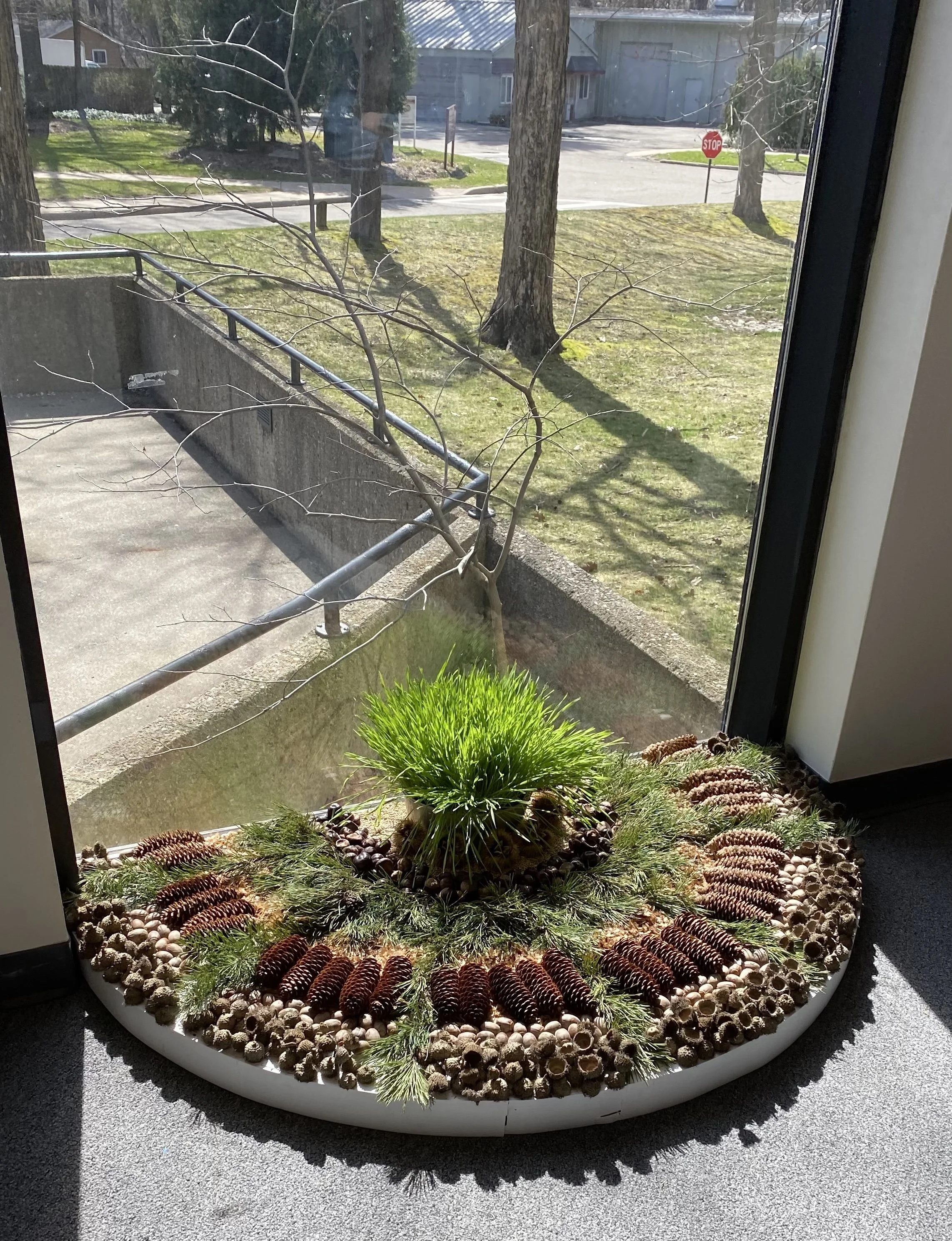
This research extends naturally into the practice of temporary and cyclical mandala-making, which functions as both artistic ritual and visual inquiry. Rooted in lunar and seasonal rhythms, these mandalas emphasize impermanence, pattern recognition, and collective authorship. The work challenges traditional hierarchies of permanence in art while offering a powerful framework for reflection and connection.
Together, these projects form a cohesive research practice grounded in participation, temporality, and care. They demonstrate how art can function simultaneously as scholarship, pedagogy, and lived experience.
My research directly informs my teaching in ceramics and three-dimensional design. Students are introduced to participatory frameworks that encourage risk-taking, embodied learning, and critical reflection. By integrating narrative, movement, and communal making into studio practice, students develop both technical skill and creative confidence.
Long-term, my scholarship aims to contribute to discourse in participatory art, craft studies, and community-based pedagogy. The work advocates for art education that honors process, presence, and human connection as essential components of creative practice.